
Hands-on care • Clear rehabilitation plans

Physiotherapy in Perth & Regional WA

Our AHPRA-registered Physiotherapists provide assessment, manual therapy, dry needling where appropriate, and rehabilitation tailored to your symptoms, goals and day-to-day function.

Mount Pleasant & Belmont clinics
Regional WA appointments
Evidence-informed care
VALD strength testing available
What you can expect

How we help

Our approach is practical and transparent. We assess your presentation, provide treatment where appropriate and plan your next steps with clear guidance and measurable progress.

Assess

Clear assessment and explanation

We identify relevant contributing factors and explain how the findings may relate to your symptoms and goals.

Treat

Hands-on treatment when suitable

Manual therapy and dry needling may be used where appropriate, with your comfort, consent and treatment needs considered.

Rehab

Rehabilitation you can follow

Targeted exercises are selected to suit your needs and progressed over time to support confidence, capacity and function.

Measure

Objective progress tracking with VALD

Where useful, VALD ForceDecks and DynaMo testing can measure strength, side-to-side differences and change over time.

Common presentations

Physiotherapy for common aches, pains & injuries

We see a wide range of musculoskeletal concerns. After assessing your presentation, your Physiotherapist tailors care to your goals, symptoms and activity demands.

View all Physiotherapy conditions
Note: Not all techniques are suitable for all presentations. Your Physiotherapist will discuss the available options and obtain your consent before any hands-on treatment.
Objective Strength & Performance Testing

VALD Testing with ForceDecks & DynaMo

VALD ForceDecks and DynaMo provide objective information about strength, power, balance and side-to-side differences. Testing can establish a baseline, guide rehabilitation or exercise planning, and measure change at key stages of recovery or performance development.

Testing is guided by a Physiotherapist, who reviews the results with you and explains how they relate to your rehabilitation, activity or performance goals.

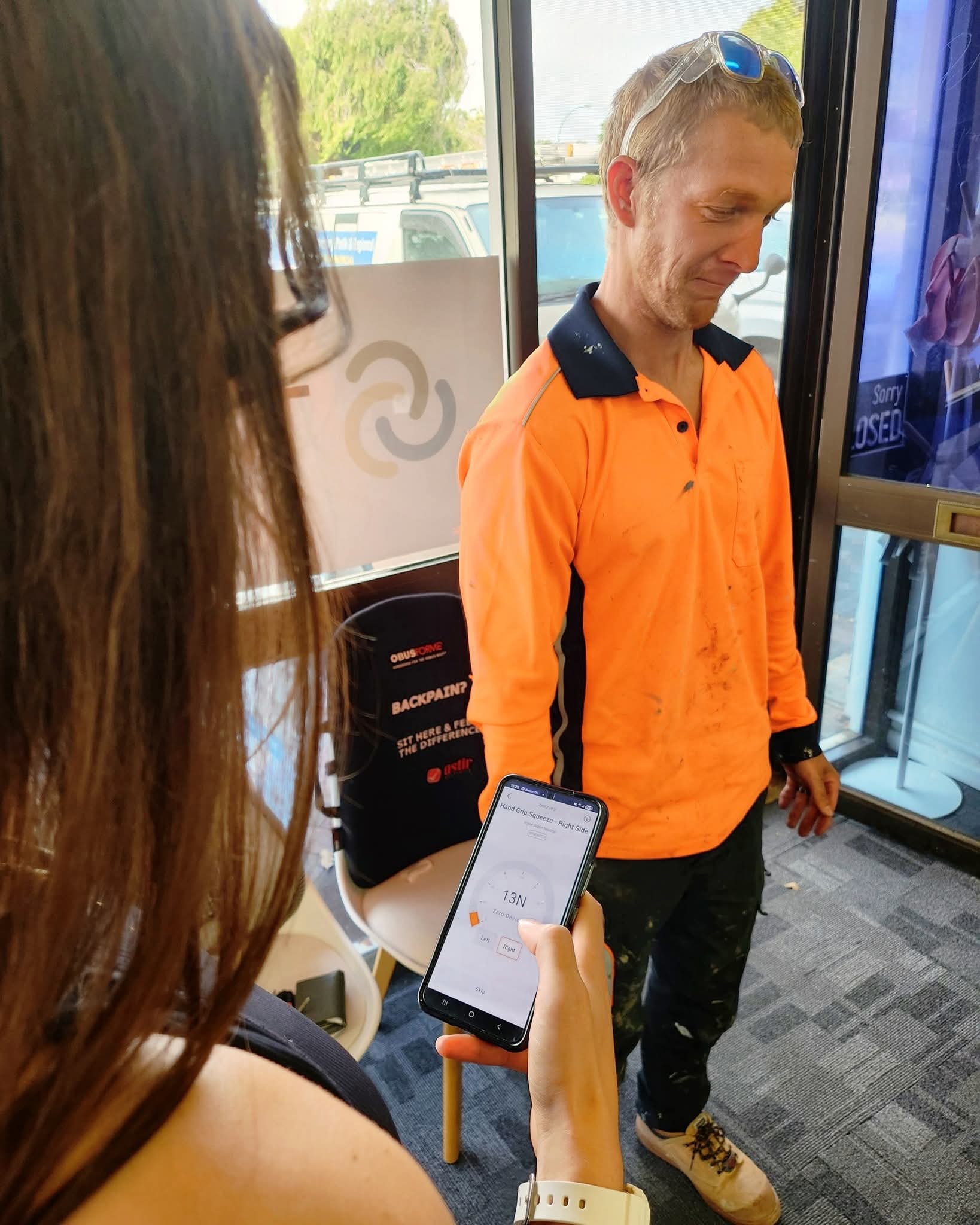
Physiotherapist performing VALD strength testing during an assessment in Perth
Objective testing guided and interpreted by a Physiotherapist.

Why use VALD testing?

Objective measurements can provide clearer information than observation alone.

  • Establish a measurable starting point
  • Compare left and right sides
  • Track change throughout rehabilitation
  • Support exercise and activity planning

Who may benefit?

Testing is selected according to your condition, goals and current stage of rehabilitation or training.

  • People recovering from injury or surgery
  • People preparing to return to sport or activity
  • Older adults working on strength and balance
  • Anyone wanting measurable progress information

ForceDecks testing

ForceDecks measure how force is produced and absorbed during standing, balance, jumping and other weight-bearing tasks.

  • Lower-limb strength and power
  • Balance and weight distribution
  • Side-to-side differences
  • Jumping and landing control

DynaMo strength testing

DynaMo measures the strength of specific muscles or muscle groups in a controlled and repeatable way.

  • Shoulder, hip, knee and other muscle strength
  • Differences between sides
  • Strength changes during rehabilitation
  • Information to support exercise progression

What to expect

Your Physiotherapist will select tests relevant to your goals and discuss the findings with you during the appointment.

  • Testing tailored to your needs and current ability
  • Results reviewed during your appointment
  • Repeat testing when clinically useful
Interested in objective strength and balance testing?
Explore VALD Strength Testing
First appointment

What to expect at your Physiotherapy appointment

Your appointment is structured around your symptoms, goals and current ability. We begin with an assessment and explanation before selecting appropriate treatment and rehabilitation options.

1

We listen first

We discuss your symptoms, goals and the activities that aggravate or ease them.

2

We assess movement and capacity

Targeted tests help identify what should be prioritised in your treatment and rehabilitation.

3

Hands-on treatment when suitable

Manual therapy or dry needling may be used where appropriate and with your consent.

4

A rehabilitation plan you can follow

You leave with practical next steps and a plan that can be progressed over time.

5

Progress tracking

We reassess when appropriate and may use objective measures to track change.

Practical info

Payment options & referrals

Funding, referral and approval requirements vary. Please contact our reception team before your appointment if you are unsure what paperwork or claim information is required.

Private health

If your policy includes Physiotherapy, please bring your physical or digital private health insurance card. Rebates vary according to your health fund and level of cover.

Medicare (GPCCMP)

If you have a valid GP Chronic Condition Management Plan referral, you may be eligible for a Medicare rebate. Full payment is required at your appointment, and the rebate is processed separately to your nominated account. Eligibility and annual service limits apply.

Workers compensation

If your injury is work-related, please bring your claim number, insurer details and referral paperwork where available. Approval and referral requirements vary by insurer and claim status.

Motor vehicle injury claims (ICWA)

If you’re attending under an ICWA claim, bring your claim number and any referral documents where required. * Please note conditions apply.

Quick note: Bringing relevant referrals, care plans, claim details and approval documents helps us confirm your funding pathway and keep your appointment focused on care.
FAQ

Physiotherapy FAQs

Find answers to common questions about appointments, referrals, treatment options, funding and what to bring.

What happens in the first appointment?
We begin by discussing your symptoms and goals before completing an assessment to understand what may be contributing. Treatment may be provided on the day where appropriate, and your Physiotherapist will discuss the recommended next steps with you.
Do I need a GP referral?
A GP referral is not required for private Physiotherapy. A valid referral is required for Medicare GPCCMP appointments and may also be required for DVA, workplace injury, motor vehicle and other funded pathways.
Do you offer dry needling?
Dry needling may be offered by a trained Physiotherapist where appropriate. Your Physiotherapist will discuss the treatment options with you and obtain your consent before proceeding.
Can I use private health insurance?
You may be able to claim a rebate if your policy includes Physiotherapy. Rebate amounts vary according to your health fund and level of cover.
Do you accept Medicare GPCCMP referrals?
Yes. We accept valid GPCCMP referrals for Physiotherapy. Full payment is required at the appointment, and the Medicare rebate is processed separately to your nominated account. Eligibility and annual service limits apply.
What is VALD testing and when is it useful?
VALD ForceDecks and DynaMo provide objective information about strength, balance, power and side-to-side differences. Testing may be used to establish a baseline, track rehabilitation progress and support exercise or return-to-activity planning.
What should I bring to my appointment?
Bring any relevant imaging, specialist letters, referrals or claim paperwork. Comfortable clothing that allows the affected area to be assessed may also be helpful.
What is your cancellation policy?
Please contact us as early as possible if you need to change or cancel your appointment. This allows us to offer the appointment time to another client. Cancellation fees may apply in accordance with the clinic cancellation policy.
Australian Physiotherapy Association member
Professional membership

Proud Member of the Australian Physiotherapy Association

Tweak Health is proud to support professional standards, ongoing learning and quality Physiotherapy care through membership with the Australian Physiotherapy Association.

Supporting professional Physiotherapy standards